
Osteopathy in Malmö
– assessment and treatment of pain and movement problems
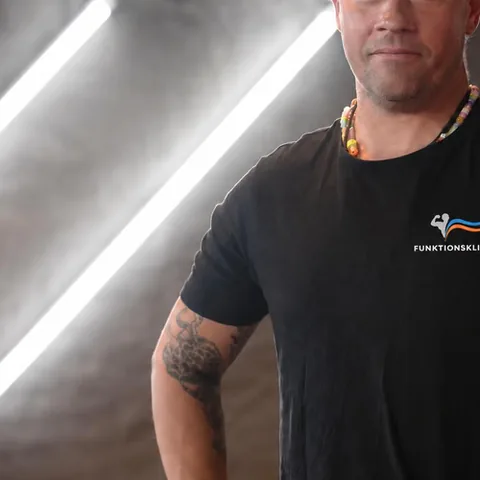
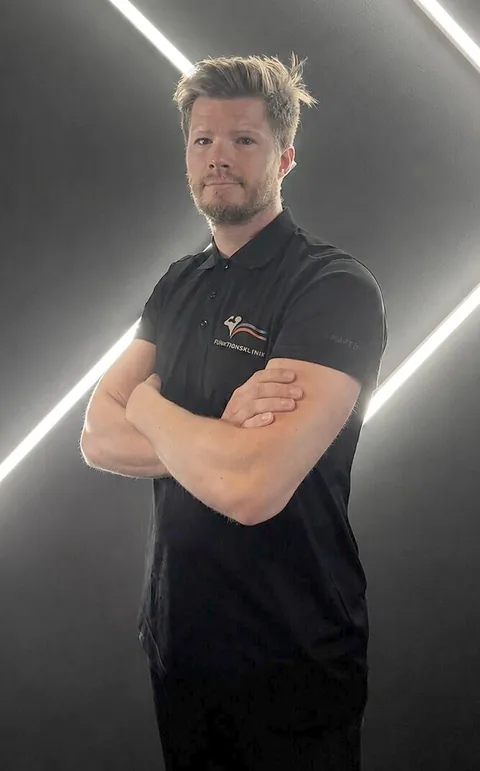
Jonathan Bengtsson
Osteopath B.Sc Hons DO, qualification in MSK diagnostic ultrasound
Do you have pain in your back, neck or joints? Do you experience stiffness, recurring pain or problems that limit you in everyday life or training?
At Funktionskliniken in Malmö we offer osteopathy focused on understanding the cause of your problems and helping you back to a functioning and active everyday life.
We combine a thorough clinical examination with individualised treatment, advice and rehabilitation.
What is osteopathy?
Osteopathy is a form of manual treatment focusing on problems of the musculoskeletal system – muscles, joints and other tissues that affect the body's function.
An osteopath uses their knowledge of anatomy, physiology and biomechanics to examine and assess pain, reduced mobility and functional problems.
Treatment may include manual techniques such as joint mobilisation, manipulation and soft tissue treatment. These are combined when needed with individually tailored exercises, load management advice and rehabilitation.
The goal is to reduce your symptoms, improve your function and give you tools to influence your own health.
What can an osteopath help you with?
We examine and treat many different types of musculoskeletal problems, for example:
- Back pain, lumbago and recurring lower back problems
- Neck pain and stiffness
- Shoulder problems and pain in the arms
- Hip, knee and foot problems
- Muscle- and tendon-related problems
- Sports-related overuse injuries
- Certain types of headache related to neck function
- Pain and movement restrictions after previous injuries
We help both those with acute problems and those who have had issues for a longer time.
What happens during a visit to an osteopath?
Discussion and medical history
We start by going through your symptoms, previous injuries, activity level and how the problems affect your everyday life. We also discuss your goals and expectations.
Clinical examination
We then carry out a focused examination with relevant orthopaedic, neurological and functional tests. The aim is to identify possible causes of your symptoms and assess which treatment or further investigation is appropriate.
Individually tailored treatment
Based on the examination we create a treatment plan together. It may include manual treatment, therapeutic exercises, advice and strategies for adapting the load in everyday life or training.
Follow-up and rehabilitation
When needed we follow up on your progress and adjust the interventions based on how you respond to treatment and which goals you want to achieve.
Osteopathy at Funktionskliniken
At Funktionskliniken we work with a modern, patient-centred approach where clinical experience is combined with current research and your individual needs.
We place great importance on you understanding your condition, feeling involved in the treatment and having a clear plan going forward.
Through our close collaboration between osteopaths, physiotherapists and other clinicians we can combine different competencies when needed to give you a coherent assessment and rehabilitation.
We also have access to musculoskeletal diagnostic ultrasound, which can be used as a complement to the clinical examination when there is a relevant medical question.
The osteopath's training
A university degree in osteopathy takes 4–5 years and must meet the criteria of the European standard published in 2015.
National requirements for the structure of the programme vary, but two of three requirements must be met:
- The programme delivers a minimum of 4,800 hours of training.
- The programme gives a minimum of 240 European Credit Transfer System (ECTS) credits, of which 60 credits are at advanced level.
- The programme is at Master's level (with or without a preceding Bachelor's degree)
- The programme must also include a minimum of 1,000 supervised clinical hours.
An approved university degree in osteopathy covers a number of well-defined subject areas:
- Osteopathic history, philosophy and approach to healthcare.
- Basic medicine (anatomy, physiology, microbiology, biochemistry, pathology, biomechanics and medical history).
- Frameworks for diagnosis and treatment.
- Knowledge of the mechanisms of action underlying the treatment.
- The ability to review and take in medical and scientific texts and to integrate new and relevant knowledge into clinical work.
- Clinical competence aimed at diagnosing dysfunction qualitatively and quantitatively.
- Osteopathic treatment techniques.
- In-depth knowledge of indications and contraindications for osteopathic treatment.
- Legal and ethical aspects of care.
- The ability to be self-critical and to receive constructive criticism from colleagues and patients.
Frequently asked questions about osteopathy
Both osteopaths and physiotherapists work with problems of the musculoskeletal system. There are large overlaps in examination and treatment. The differences mainly concern educational background, professional regulation and how each clinician works. At Funktionskliniken we collaborate across professions to find suitable interventions based on your needs.
The treatment is adapted to your symptoms and circumstances. Some techniques may feel uncomfortable, and temporary soreness can occur afterwards. You are always involved in the choice of treatment method.
It varies depending on the problem, how long you have had the symptoms and how you respond to treatment. At the first visit we make an assessment and discuss a reasonable plan. Not all problems require repeated treatments.
No, you can book an appointment directly with our osteopaths without a referral.
Manual treatment can be part of the treatment for certain long-term musculoskeletal problems. With long-term pain it is often important to combine different interventions, such as physical activity, exercise, education and strategies for managing the symptoms.
Book osteopathy in Malmö
Whether you are seeking help for acute problems, long-term pain or recurring issues during training, you are welcome at Funktionskliniken. We help you understand your symptoms and find a suitable way forward.
Book your appointment with an osteopath at Funktionskliniken in Malmö.
Price and visit length
Osteopathy & orthopaedic assessment – first visit
Jonathan Bengtsson
45 min · 950 kr
Book this appointmentOsteopathy & orthopaedic assessment – follow-up
Jonathan Bengtsson
30 min · 750 kr
Book this appointmentOsteopathy – first visit
Niklas Torpling
55 min · 1200 kr
Book this appointmentOsteopathy – follow-up
Niklas Torpling
40 min · 1050 kr
Book this appointment